Low-dose CT scan in Laurel, MDFast, clear CT at the lowest dose that does the job.
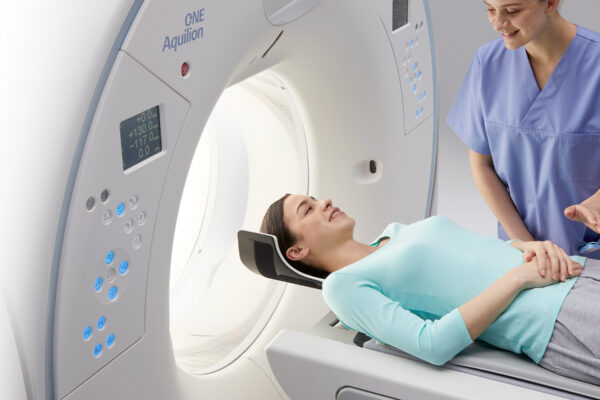
A CT scan builds detailed cross-sectional images of your body in minutes. Our protocols use the lowest radiation dose possible while keeping image quality high, on a spacious wide-bore scanner made for patients of every size.
- Time on the tableA few minutes
- RadiationLow-dose protocols
- PreparationDepends on the exam
- Results to your doctor24–48 hours
Why choose us
Why patients choose our CT scan
Low dose
Protocols tuned to give the lowest dose possible while keeping image quality superb.
Sharp
Crisp, high-resolution images help your doctor reach a faster, more accurate diagnosis.
Comfortable
A spacious wide-bore design suits patients of all body sizes and eases claustrophobia.
Quick
Fast scan times and a quick turnaround on your report.
What it shows
What a CT scan can help diagnose
CT is often the fastest way to see bones, blood vessels and organs together. Doctors commonly order it to look for:
- Tumors & massesFinding, measuring and following growths anywhere in the body.
- Chest & lungsLung nodules, infections and other chest conditions.
- Abdomen & pelvisPain, kidney stones, inflammation and organ problems.
- BrainStroke, bleeding and tumors.
- Blood vesselsInternal bleeding and clots.
- BonesComplex fractures and joint detail that X-ray cannot show.
Specialized CT exams
Two CT exams worth knowing about
Both are ordered by your doctor and take only minutes on our low-dose scanner.
Low-dose CT for lung cancer screening
A quick, non-invasive scan for adults at high risk of lung cancer. National guidelines recommend yearly screening for adults aged 50 to 80 with a 20 pack-year smoking history who smoke now or quit within the past 15 years. Your doctor can confirm whether you qualify and order the scan.
Coronary calcium scoring
A short, non-contrast CT of the heart that measures calcified plaque in the coronary arteries. The result, your calcium score, helps your doctor judge heart-attack risk, especially if you have risk factors such as high cholesterol, high blood pressure, diabetes, smoking or a family history of heart disease.
Before your exam
How to prepare
Your appointment confirmation includes exact instructions for your exam. In general:
- Ask about fastingIf your CT uses contrast, you may be asked not to eat for a few hours beforehand. Follow the instructions we give you when you book.
- Tell us about allergiesLet us know about any previous reaction to contrast dye, as well as kidney disease or diabetes medicines such as metformin.
- PregnancyIf you are or might be pregnant, tell your doctor and our technologist before the scan.
- Leave metal at homeJewelry, glasses and metal clasps can show up on images, so you may be asked to remove them.
Designed around you
- Spacious, open wide-bore scanner
- Non-invasive and painless
- Most scans finish in minutes
- Clear instructions before you arrive
Bring your doctor’s order, photo ID and insurance card. Completing your patient forms ahead of time speeds up check-in.
Schedule online (opens in a new tab)How much radiation does a CT scan use?
CT uses more radiation than a plain X-ray, which is why we use low-dose protocols set to the lowest dose that still answers your doctor’s question. For most people the benefit of an accurate diagnosis far outweighs the small risk. If you have concerns, talk them through with your doctor or our technologist.
Will I need contrast for my CT?
Some CT exams use contrast, given by IV or as a drink, to highlight blood vessels and organs. Your doctor’s order specifies it. If you need contrast, we will ask about allergies, kidney function and certain medicines first.
Who should get a lung cancer screening CT?
Current guidelines recommend yearly low-dose CT screening for adults aged 50 to 80 who have a 20 pack-year smoking history and currently smoke or quit within the past 15 years. Your doctor can review your history and order the scan.
What is a coronary calcium score?
It is a quick, non-contrast CT of the heart that measures calcified plaque in the coronary arteries. A higher score means more plaque and a higher risk of coronary artery disease, which helps your doctor decide on lifestyle changes or medicines.
How long does a CT scan take?
The scan itself usually takes only a few minutes. Exams with contrast take longer because of the preparation, so plan for some extra time at your visit.
More imaging
Other services at Align
3T wide-bore MRI
Detailed images of the brain, spine, joints and soft tissue on a 3T magnet with a wider, calmer opening.
Learn moreHigh-resolution ultrasound
Real-time, radiation-free imaging of organs, vessels, muscles and lumps with exceptional clarity.
Learn moreDigital X-ray
Quick, low-dose digital images of bones, joints and the chest, sent straight to the radiologist.
Learn moreSchedule your CT scan in Laurel
Book your exam online in a few minutes, or call and talk with a real person at (240) 499-2863. Same-day or next-day appointments are often available.